
The roofer's estimate says one number. The first insurance check says another, sometimes a much smaller one. The gap isn't always about the damage. Often it comes down to how your policy settles roof losses: at replacement cost, at actual cash value, or on a roof payment schedule tied to your roof's age and material.
Here's how those approaches work and how the "second check" fits in. Every policy is different, so your own policy wording controls.
Replacement Cost vs. Actual Cash Value in One Minute
The National Association of Insurance Commissioners (NAIC) explains the difference this way: replacement cost value (RCV) pays to repair or replace damaged property "without deducting for depreciation," while actual cash value (ACV) pays "the depreciated cost" of the property. If your policy doesn't say it pays replacement cost, the NAIC says it "likely only covers actual cash value."
The NAIC's own example shows how big the gap can be. Two neighbors have identical $15,000 roofs destroyed by the same storm, and each has a $1,000 deductible. The neighbor with RCV is paid $14,000. The neighbor with ACV, whose 10-year-old roof is depreciated at $1,000 a year, is paid $4,000. These are the NAIC's illustrative numbers, not a quote for your roof.
Age makes the gap wider. For a 20-year-old roof, the NAIC notes an ACV policy "may pay as little as 20% of the cost to replace the roof, since the useful life of a roof is usually about 25 years."
Three Common Ways a Roof Claim Gets Paid
1. Replacement cost, usually in two checks
The standard ISO homeowners form (HO-3) pays covered building losses "at replacement cost without deduction for depreciation," but it will pay "no more than the actual cash value of the damage until actual repair or replacement is complete." In practice, the NAIC says the insurer "at first may pay only the ACV," then pays the difference, called recoverable depreciation, once the roof is repaired or replaced.
2. An ACV roof endorsement
Some policies settle the roof differently from the rest of the house. As the NAIC puts it, "the policy may pay ACV on your roof, but RCV on the rest of your home and property." One standard ISO form for this is titled "Actual Cash Value Loss Settlement Windstorm Or Hail Losses To Roof Surfacing" (HO 04 93). With an endorsement like this, depreciation on the roof generally isn't paid back later, so there may be no second check for the roof.
3. A roof payment schedule
Some insurers add a roof payment schedule endorsement for wind and hail damage, which pays a set percentage of the roof's replacement cost based on the roof's age and material, and that percentage drops as the roof gets older. Look for a table or schedule attached to your policy, and note which roof material and age your insurer has on file.
Why Roof Age Matters More Than Ever
Depreciation is based on things like the item's condition, the cost of a new one, and how long it's expected to last, according to the NAIC. For roofs, that means age and material drive most of the math.
Mortgage rules have also changed. Since March 18, 2026, Fannie Mae says "Roofs must be insured, but do not have to be insured on a replacement cost basis," and the FHFA says Fannie Mae and Freddie Mac now accept ACV roof coverage. Homeowners may see ACV roof terms more often. A lender accepting ACV doesn't mean it's right for you, so talk with your agent.
The "Second Check": Recoverable Depreciation and Deadlines
If your roof is on replacement cost, the second check usually depends on finishing the work and sending proof to your insurer. There's usually a time limit. The NAIC says it "can range from 6 months to up to one year, depending on your state's laws and your policy," and that insurers may give you more time if you ask. Rules vary by state, so check your policy and ask your adjuster for your exact deadline in writing.
The standard HO-3 form also lets you take an ACV payment first and claim the rest later, as long as you notify the insurer of your intent "within 180 days after the date of loss." Your own policy may use different wording.
Replacement cost generally means "like kind and quality." In the NAIC's example, a 3-tab shingle roof is replaced with another 3-tab shingle roof, not a more expensive slate roof. For help gathering evidence, see our guide to documenting roof hail and wind damage.
What to Check Before the Next Storm
- Find your loss settlement wording. Is your roof RCV, ACV or on a schedule?
- Look for any roof endorsement or roof payment schedule, and note its form name and page.
- Ask your agent if the age and material of your roof are correct on your policy.
- Read every renewal notice for changes to your roof coverage.
- After a claim, ask for the depreciation calculation and keep proof you paid your deductible.
- Calendar your "second check" deadline.
Your declarations page is the place to start. See our guide to reading your declarations page.
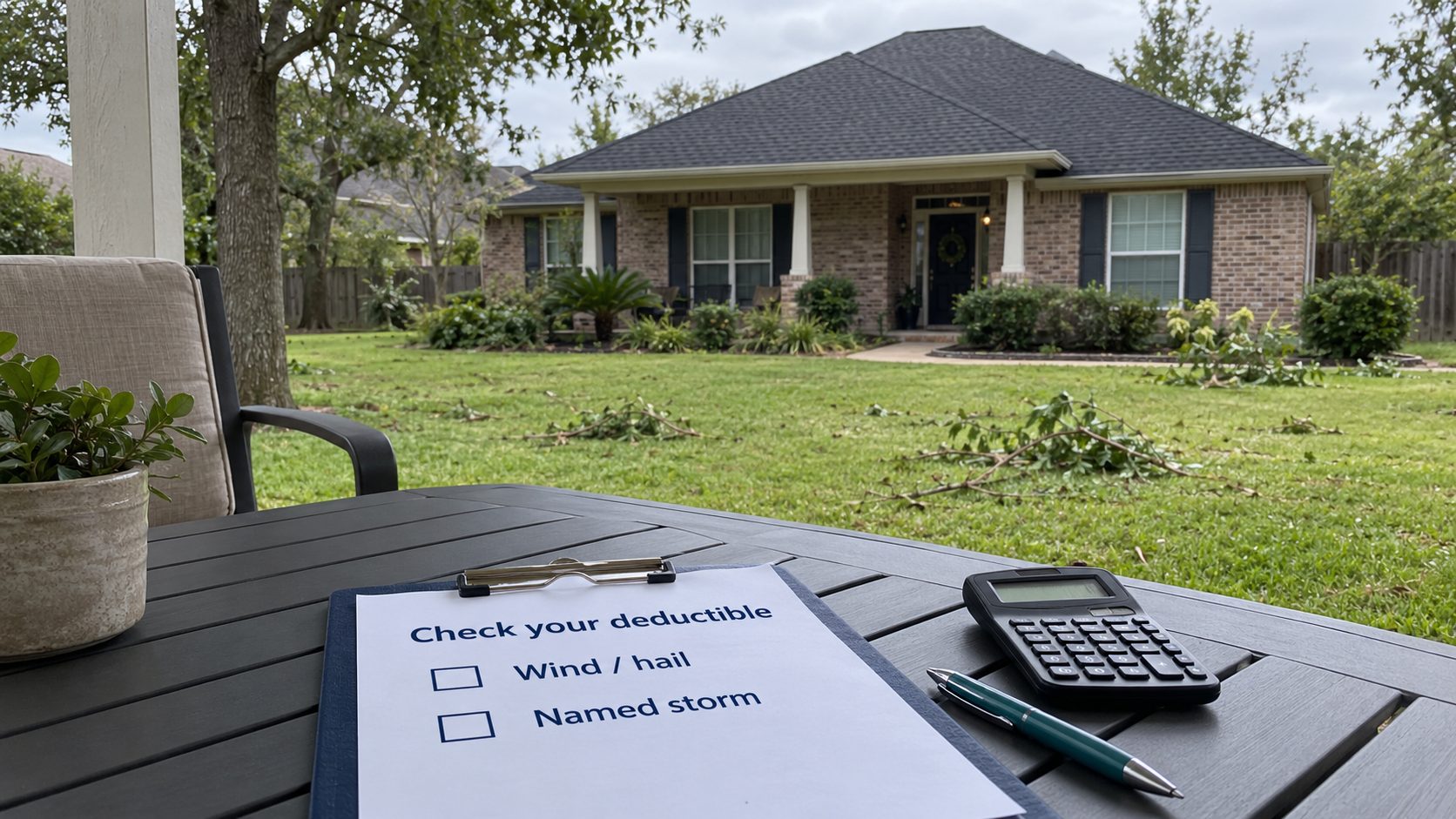
Our guide to wind/hail and named-storm deductibles explains which deductible may apply.
When to Call a Public Adjuster
Consider getting help when:
- Your roof check is far below your contractor's estimate and you don't understand why
- You aren't sure whether your roof is under an ACV endorsement or a roof payment schedule
- The depreciation taken doesn't seem to reflect your roof's condition before the storm
- You're worried about missing a deadline to recover withheld depreciation
A public adjuster works for you, not the insurance company. We can review your loss settlement section and any roof endorsement or schedule, check the roof age and material used, compare the depreciation with your roof's documented pre-loss condition, and track your deadlines. Results depend on your policy and the facts of your claim. Learn more about what a public adjuster does.
All Perils Consulting Inc. holds Texas Public Adjuster Firm License #3296354 and Louisiana Public Adjuster Firm License #1207216. In Mississippi, public adjusting services are provided under Barry Van Shoubrouek's individual Mississippi public adjuster license #10768959. The firm itself is not licensed in Mississippi.
Roof check smaller than you expected? Call 877-5APC-247 (877-527-2247) or contact us. We can review your policy and talk through next steps with you.
Frequently Asked Questions
My policy is "replacement cost." Why did I get a smaller check?
Many replacement cost policies pay the actual cash value first and hold back depreciation until the repair or replacement is done. Your deductible is also subtracted. Ask your adjuster for the depreciation breakdown.
Why does my roof get less than the rest of my house?
Your policy may pay ACV on the roof and replacement cost on the rest of the home, or it may use a roof payment schedule. Check your policy for a roof endorsement or schedule.
How do I get my depreciation back?
Finish the repair or replacement, then send the insurer proof such as the final invoice before your policy's deadline. If you need more time, ask your insurer in writing.
Who else can I call with questions?
Your adjuster and your insurance company come first. The NAIC also suggests contacting your state's department of insurance if you have questions about your claim or deadlines.
All Perils Consulting Inc. is a licensed public adjusting firm. We are public adjusters, not attorneys, and this article is general information, not legal advice. Every claim and policy is different.
Free claim review
Questions about your claim?
Tell us what happened. A licensed public adjuster will look over your claim and policy and explain your options.
Get a free claim review