
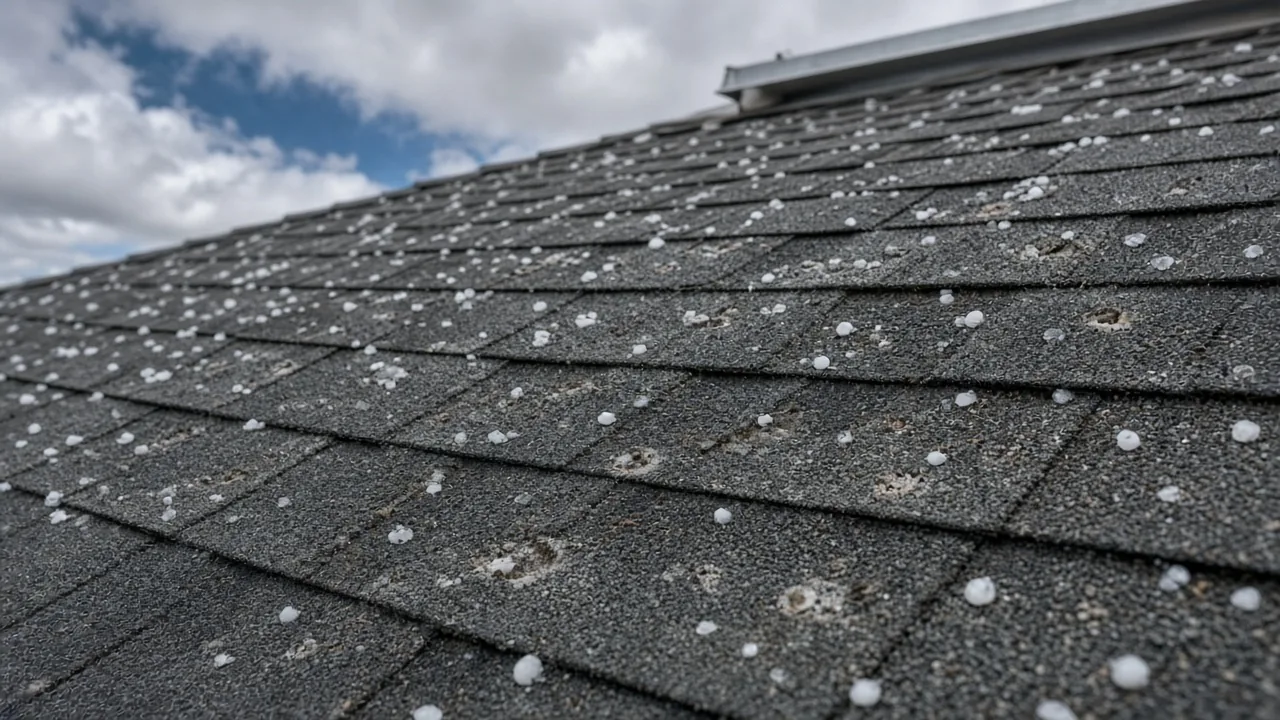
After a strong storm, it can be hard to tell how much damage your roof really took. Some hail and wind damage is obvious, like missing shingles or a tree limb on the roof. Other damage is subtle and easy to miss from the ground.
Good documentation helps everyone see the same picture. Here's how to gather it safely before the insurance company's adjuster arrives.
Safety First: Stay Off the Roof
Please don't climb onto your roof to look for damage. Wet shingles, loose granules, steep pitches, and damaged decking make roofs dangerous, especially right after a storm. Most of what you need to document can be captured from the ground, from a window, or from the attic.
If a professional inspects your roof, let them take the photos from up there.
Report the Claim Promptly
Most homeowners policies require prompt notice of a loss. Some policies and some states also set specific time limits for reporting or filing wind and hail claims. Don't wait until you have a full picture. You can report the claim and keep adding documentation as you go.
When you call, write down your claim number, the name of the person you spoke with, and when to expect an inspection.
Record the Storm Itself
Your claim starts with the storm, so capture what you can about it.
- Note the date and approximate time the storm hit.
- Photograph hailstones next to a coin, ruler, or tape measure to show their size.
- Save screenshots of local weather alerts or news reports about the storm.
- Write down what you heard and saw, such as hail hitting windows or wind bending trees.
If neighbors had damage from the same storm, that's useful context too.
Document From the Ground
Walk all the way around your home and take photos and video from several angles. Look for these common signs of hail and wind damage.
On and Around the Roof
- Shingles, shingle pieces, or ridge caps in the yard
- Lifted, creased, or missing shingles visible from the ground
- Piles of shingle granules collecting at downspout outlets
- Dents in gutters, downspouts, and roof vents
Elsewhere on the Property
- Dented or cracked siding, fascia, and trim
- Torn window screens and damaged window frames
- Dented fins on outdoor air conditioning units
- Dings on mailboxes, fences, patio furniture, and grills
- Damage to sheds, carports, and other structures
Soft metals like gutters and AC fins often show hail impacts clearly. Photographing them can help show that hail struck the property.
Hail Damage vs. Wind Damage: What Each Can Look Like
Hail and wind often arrive together, but they tend to leave different marks. Knowing the difference helps you point out the right things during the inspection.
Signs Often Associated With Hail
- Dark spots or "bruises" where granules have been knocked off shingles
- Round dents in metal vents, flashing, and gutters
- Spatter marks, which are small clean spots on dirty or oxidized surfaces where hail struck
- Cracked or chipped paint on wood trim and fences
Signs Often Associated With Wind
- Missing shingles or tabs, often along edges, ridges, and corners
- Creased shingles that were lifted and folded back by gusts
- Broken seal strips, where shingles no longer lie flat
- Impact damage from limbs or debris
You don't need to diagnose the cause yourself. Photograph what you see and note where you found it.
Check Inside, Too
Storm damage doesn't always stay on the outside. Look for water stains on ceilings and walls, especially on upper floors. If you can safely access your attic, check for daylight coming through the roof deck, damp insulation, or drips during rain.
Photograph anything you find, and note the date you first noticed it.
Make Reasonable Temporary Repairs
If your roof is letting water in, take reasonable steps to prevent further damage. That might mean having a professional put a tarp over the damaged area or placing buckets under drips.
Before any temporary repair, photograph the damage. Keep all receipts. Don't make permanent repairs before the insurance company has had a chance to inspect, unless it's an emergency, and if it is, document it thoroughly.
Be Thoughtful About Storm Visitors
After hail and wind storms, many contractors go door to door. Some are local and reputable; others travel from storm to storm. Before you sign anything, take time to read it, check the company's license and reviews where applicable, and make sure you understand what you're agreeing to. Rules about who may discuss or handle your insurance claim on your behalf differ by state.
Keep a Storm Folder and Know Your Deductible
Keep your photos, weather screenshots, receipts, contractor reports, and a call log in one folder, on paper or on your phone. It also helps to know your deductible before the inspection. Many policies in storm-prone areas have a separate wind or hail deductible. Our guide to reading your declarations page explains how to find it.
Prepare for the Adjuster's Inspection
When the insurance company's adjuster schedules a visit, try to be home for it. You know your property better than anyone.
- Have your photos, video, and storm notes ready to share.
- Walk the property with the adjuster and point out each area of damage you found.
- If a roofer or contractor already inspected, ask whether they can attend or share their findings.
- Take your own notes on who attended and what was inspected.
Questions You Might Ask
- Which areas of the roof and property did you inspect?
- Will I receive a copy of your estimate and photos?
- What happens next, and when should I expect to hear back?
After the Inspection
When you receive the estimate, compare it to your own documentation. Does it include every area of damage you found? Are the measurements and materials consistent with your home? If something seems missing, it's reasonable to ask questions and share additional photos.
If you and the insurance company disagree about the amount of the loss, your policy may include an appraisal process. You can learn more about it on our appraisal page, and our FAQs answer other common questions about storm claims.
Frequently Asked Questions
How long do I have to file a hail or wind claim?
It depends on your policy and your state. Some set specific time limits for weather-related claims. The safest approach is to report the damage promptly.
Can hail damage a roof even if it isn't leaking?
Yes. Bruised shingles and granule loss may not cause a leak right away, but they can still be damage. A professional inspection can help identify it.
Should I get a roofer's estimate before the adjuster comes?
It isn't required, but it can help. If you have one, share it during the inspection. Read any contractor agreement carefully before signing.
What if the adjuster says the damage is wear and tear?
Ask for the explanation in writing, share your storm documentation, and consider requesting a reinspection.
If you'd like a second set of eyes on your roof claim, we're glad to talk whenever it's convenient for you.
All Perils Consulting Inc. is a licensed public adjusting firm. We are public adjusters, not attorneys, and this article is general information, not legal advice. Every claim and policy is different.
Free claim review
Questions about your claim?
Tell us what happened. A licensed public adjuster will look over your claim and policy and explain your options.
Get a free claim review