A break-in is stressful enough. The insurance claim that follows adds a second job: proving what was taken or damaged, what it was worth, and that the loss fits a covered peril. Theft and vandalism (sometimes called malicious mischief) are covered on many homeowners and commercial property policies, but special limits, vacancy rules, and documentation often decide how much is paid.
This post walks through what to do first, how to build a stolen-items list, where special limits and scheduling matter, and when to bring in help. Every policy is different, so your declarations page and coverage form control.
Call the Police First
Most policies require prompt notice to the police after a theft, and insurers almost always ask for the report number. Make sure everyone is safe, then:
- Call law enforcement and get a report started.
- Write down the report number and the officer's name or badge information.
- Ask how to get a copy of the report when it is available.
- Do not wait days to report — delayed notice can create friction on the claim.
A police report does not by itself prove value or ownership, but it is usually a condition of coverage and a foundation for the claim file.
Photograph Before You Clean Up
Document the scene before you reset locks, sweep glass, or put rooms back together.
- Photograph and video forced entry points: doors, frames, locks, windows, and any tools or debris left behind
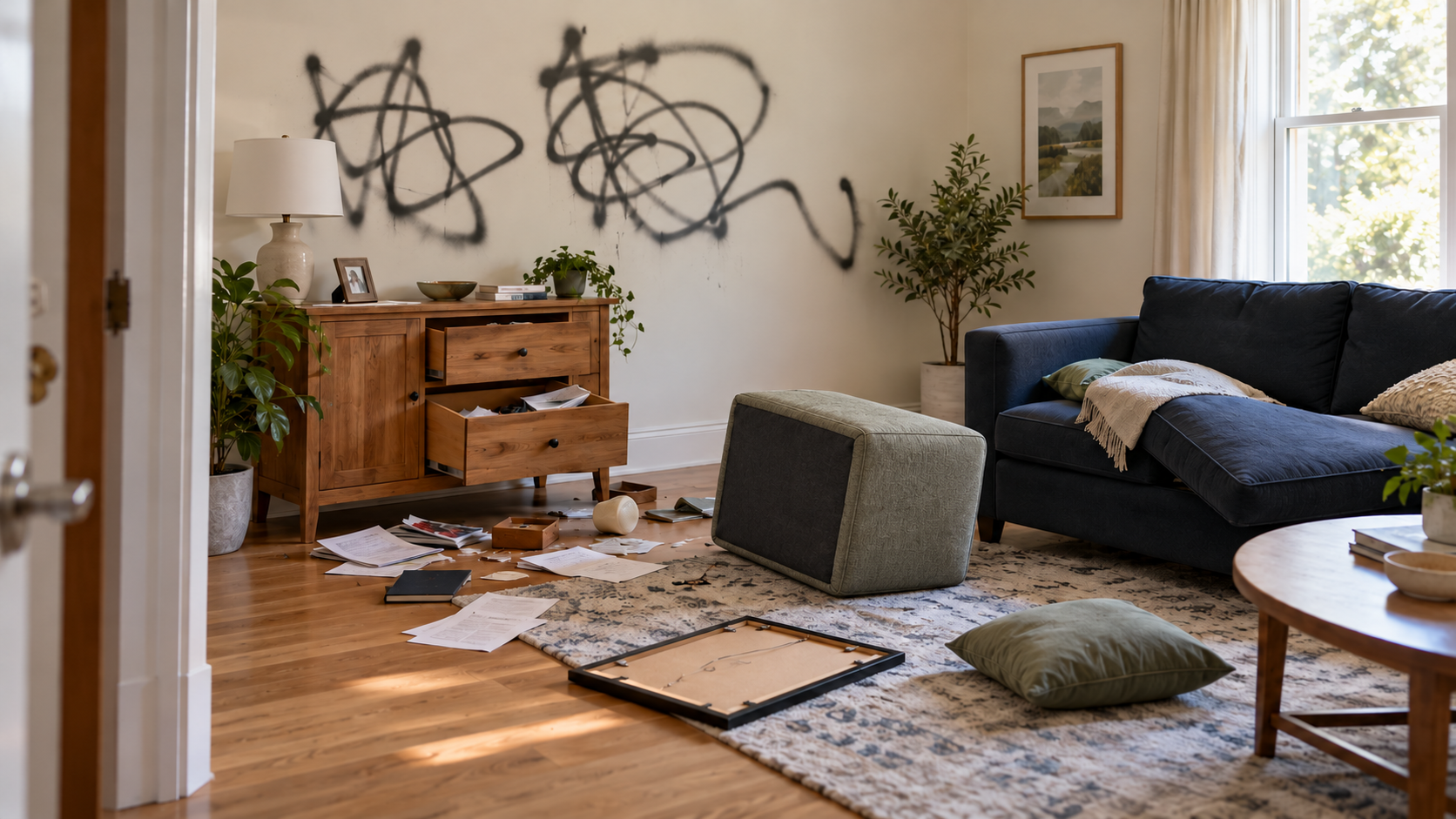
- Capture vandalism: graffiti, smashed fixtures, cut wires, and damaged security cameras or alarm panels
- Note missing items in place — empty spots on shelves, cut cable ends, or open drawers
- Keep temporary repair receipts (boarding, locksmith, glass) and label what you spent
Then secure the property. Cancel stolen cards, change locks and access codes, and report the claim promptly to your insurer. Our step-by-step claim process guide covers what usually happens after you open a claim.
Build a Detailed Stolen-Items List
Insurers expect a contents inventory, not a short paragraph. For each item, include what you can:
- Description, brand, model, and serial number if known
- Approximate age and condition before the loss
- Estimated replacement cost or actual cash value, depending on your policy
- Proof of ownership: receipts, bank or card statements, manuals, boxes, appraisals, and older photos or videos on your phone
Items you discover missing days later should be added to the same claim in writing as soon as you notice them. Our guide to building a home inventory shows a practical way to organize this list before or after a loss.
Special Limits vs. Scheduled Personal Property
Many homeowners forms put low special limits on categories that are frequently stolen — jewelry, watches, firearms, cash, silverware, and some collectibles — unless those items are scheduled (listed separately) with higher limits or scheduled personal property coverage. Published ISO-style benchmarks are only examples; some Texas forms use lower special limits than those examples.
That is why a jewelry claim sometimes pays only a fraction of the replacement cost under the base form. Check your declarations for scheduled items and endorsements. Our declarations page guide explains where those limits usually appear.
Other common limits and exclusions include:
- Off-premises theft at a lower limit than on-premises coverage
- Mysterious disappearance when there is no evidence of theft
- Theft by household members or people you allowed in
- Buildings under construction, where theft of materials may be limited or excluded
Vacancy Rules (Baseline Only)
On many ISO-style homeowners forms, a common baseline is that vandalism coverage is limited or excluded if the building was vacant for more than about 60 consecutive days before the loss. That is form language, not a universal rule, and it is mainly a vandalism condition on those forms — not a single nationwide "theft vacancy" law. Your policy may set a shorter period, define "vacant" differently, or treat theft, rental, and seasonal properties under separate conditions. Check your declarations and coverage form.
Rental and seasonal property owners should pay especially close attention to occupancy and vacancy conditions before and after a loss.
What's Often Covered
Depending on your policy, a theft or vandalism claim may include:
- Personal property: stolen or damaged belongings, subject to special limits and deductibles
- Dwelling and other structures: break-in damage to doors, windows, locks, frames, and walls, plus vandalism damage
- Loss of use / additional living expenses: if the damage makes the home unlivable during repairs
- Related damage: for example, water damage after plumbing fixtures or copper are stolen — when that ensuing damage is otherwise covered
Insurer Pushback You May See
Common friction points include:
- Requests for extensive proof of ownership on everyday items
- Applying special limits to jewelry, firearms, or electronics
- Vacancy exclusions on rental or seasonal properties
- Heavy depreciation on stolen contents
- An examination under oath on larger claims
Stay organized, answer in writing when you can, and keep copies of everything you send.
When to Call a Public Adjuster
Consider getting help when:
- The inventory is large or high-value and the carrier's offer looks incomplete
- Special limits or vacancy language is being used to cut the claim
- Break-in damage to the structure is under-scoped
- You are asked for an examination under oath or a sworn proof of loss and want help preparing
A public adjuster works for you, not the insurance company. We help build and value the contents inventory, document break-in and vandalism damage, review limits and conditions, and negotiate the claim. Learn more about what a public adjuster does and our public adjusting services.
Dealing with a theft or vandalism claim? Call 877-5APC-247 (877-527-2247) or contact us. We can review your policy and the insurer's position with you.
Frequently Asked Questions
Do I need a police report for a theft claim?
Almost always. Most policies require prompt notice to the police after a theft, and insurers typically ask for the report number. Get it early and keep a copy with your claim file.
Why did my insurer only pay part of my jewelry claim?
Many policies have special limits for theft of jewelry, watches, and similar items under the base personal property coverage. Items scheduled separately are typically covered up to their scheduled value, subject to the rest of the policy terms.
Is vandalism covered if my property was vacant?
On many ISO-style forms, vandalism coverage is limited or excluded after a vacancy period — often around 60 consecutive days as a common baseline. That baseline is mainly about vandalism on those forms; theft and other coverages may follow different rules. Your policy may set a shorter period or define vacancy differently. Check your declarations and coverage form.
What if I don't have receipts for stolen items?
Other proof can help: bank or card statements, photos, videos, manuals, boxes, serial numbers, and appraisals. Build the most detailed list you can and add items as you remember them.
Are items stolen from my car covered under homeowners insurance?
Personal belongings stolen from a car are often covered under the personal property section of a homeowners or renters policy, subject to the deductible and any special limits. The vehicle itself and its permanently installed equipment are usually handled under auto insurance.
All Perils Consulting Inc. is a licensed public adjusting firm. We are public adjusters, not attorneys, and this article is general information, not legal advice. Every claim and policy is different.
Free claim review
Questions about your claim?
Tell us what happened. A licensed public adjuster will look over your claim and policy and explain your options.
Get a free claim review