
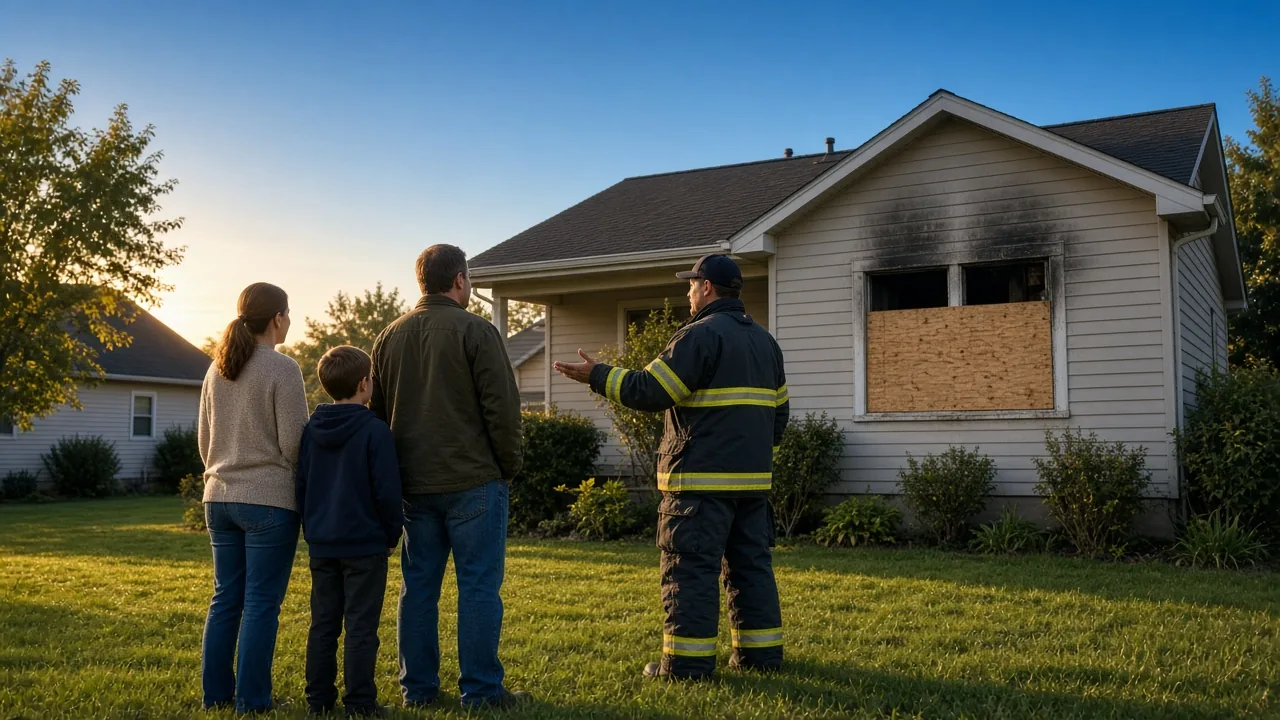
The hours after a house fire are some of the hardest a family can go through. You may be standing outside your home with little more than what you're wearing, trying to figure out where to sleep tonight and what to do next.
You don't have to solve everything at once. This checklist covers the steps that tend to matter most in the first two days, so you can protect your family, your home, and your insurance claim.
First, Make Sure Everyone Is Safe
Nothing else matters until people and pets are safe. Once the fire is out, the structure may still be dangerous.
- Don't go back inside until the fire department says it's safe to enter.
- Don't turn the gas, electricity, or water back on yourself. Let the utility company or a licensed professional do that.
- If you take medications, need eyeglasses, or have important medical devices inside, ask the fire department whether someone can retrieve them safely.
- Watch for hidden hazards like weakened floors, hanging ceiling material, and soot on surfaces you may touch.
Get the Fire Department's Information
Before the crews leave, ask for the name of the fire department and the incident or report number. The official report may take some time to become available, but your insurance company will likely ask for it. Write the number down somewhere you won't lose it, like a note on your phone.
Notify Your Insurance Company
Report the fire to your insurance company as soon as you reasonably can. Most homeowners policies require prompt notice of a loss. You can usually call the claims number on your policy, your insurance card, or the company's app or website.
You don't need to have every answer on that first call. Just share the basic facts: what happened, when, and whether the home is livable. For a look at what usually happens next, see how a property claim moves from first notice to payment.
What to Write Down on That First Call
- Your claim number
- The name and phone number of the person you spoke with
- The name of the adjuster assigned to your claim, if one has been assigned
- The date and time of the call
- Anything you were told to do next
Ask About Living Expenses
If you can't stay in your home, ask whether your policy includes Loss of Use or Additional Living Expense coverage, and how the company would like you to handle hotel, meal, and other extra costs. Policies differ on limits and time frames, so ask rather than assume.
Protect the Property From Further Damage
Most policies expect you to take reasonable steps to keep the damage from getting worse. After a fire, that often means boarding up broken windows and doors, putting a tarp over openings in the roof, and securing the property against theft and weather.
Before any mitigation work starts, take photos and video of the damage as it is. Then keep every receipt for materials, labor, and services related to protecting the home.
Don't Throw Things Away Yet
It's natural to want to start cleaning up. But damaged items may need to be seen by your insurance company's adjuster before they are discarded. Unless something is a health or safety hazard, set it aside and photograph it rather than tossing it.
Read Before You Sign
Board-up, mitigation, and restoration companies often arrive quickly after a fire. Many do good, necessary work. Still, take a moment to read any document before you sign it. Some agreements cover more than the immediate job, and the rules on what these contracts can include vary by state. If you don't understand a document, it's okay to say you need time to review it.
Document Everything You Can
Good documentation is one of the most useful things you can do for your claim. When it's safe to do so, record what you see.
- Take wide photos of each room, then close-ups of damaged items.
- Record slow, narrated video walking through the home.
- Photograph the outside of the house from all sides.
- Start a simple claim journal with dates, conversations, and expenses.
Smoke and Soot Travel Farther Than You Think
Rooms that never saw a flame can still have smoke odor, soot residue, or heat damage. Closets, ductwork, attics, and contents in drawers can all be affected. Document these areas too, even if they look fine at first glance.
Find a Place to Stay and Track Your Costs
Whether you stay with relatives, in a hotel, or in a short-term rental, keep track of the extra costs you're paying because you can't live at home. That can include lodging, meals beyond your normal grocery bill, extra mileage, and laundry.
Keep receipts in one place, even a large envelope or a dedicated folder on your phone. It's much easier to organize them now than to recreate them weeks later.
Start Your List of What Was Lost
You won't finish a full contents list in 48 hours, and you don't need to. But starting early helps while memories are fresh. Go room by room and jot down what you remember. Old photos, online order histories, and bank statements can help you fill in the gaps later. Our guide to building a home inventory includes tips for reconstructing a list.
Take Care of Yourself
A fire is a loss in every sense. Lean on family, friends, faith communities, and local relief organizations. If you need to replace identification, prescriptions, or important documents, make a short list and tackle one item at a time. Consider forwarding your mail to a temporary address.
When It Helps to Have Someone in Your Corner
Fire claims often involve several parts at once: the structure, your personal belongings, and your living expenses. That can be a lot to manage while you're also rebuilding daily life.
A licensed public adjuster works for the policyholder, not the insurance company, and can help review your policy, document the loss, and prepare the claim. You can read more about how that works on our public adjusting page. There's no rush to decide in the first 48 hours; focus on safety and the basics first.
Frequently Asked Questions
How soon should I report a house fire to my insurance company?
As soon as you reasonably can. Most policies require prompt notice, and some set specific deadlines. You can report the fire before you know the full extent of the damage.
Can I go back inside to get my belongings?
Only after the fire department or local officials say it's safe. Even then, wear protective gear, and photograph items before you remove them.
Will my policy pay for a hotel?
Many policies include Loss of Use coverage that may help with extra living costs. Limits and time frames vary, so ask your adjuster how to handle lodging and keep every receipt.
Should I throw away smoke-damaged items?
Not right away, unless they're a health hazard. Photograph them, set them aside, and ask the insurance company before discarding anything.
When you're ready to talk through your fire claim, we're here to listen. Reach out to our team any time.
All Perils Consulting Inc. is a licensed public adjusting firm. We are public adjusters, not attorneys, and this article is general information, not legal advice. Every claim and policy is different.
Free claim review
Questions about your claim?
Tell us what happened. A licensed public adjuster will look over your claim and policy and explain your options.
Get a free claim review